Biophilic design in healthcare
In healthcare, nature is not decoration but a means: people who see green experience less stress and pain and recover faster. A waiting room with plants, wood and daylight does something to the blood pressure of everyone sitting there, visitor and staff alike.
The evidence
In 1984 Roger Ulrich compared patients with a view of a brick wall and patients with a view of trees: the second group stayed in hospital for a shorter time and asked for less pain relief. Since then that effect has been found in dozens of studies, in waiting rooms, nursing homes and treatment rooms.
The waiting room
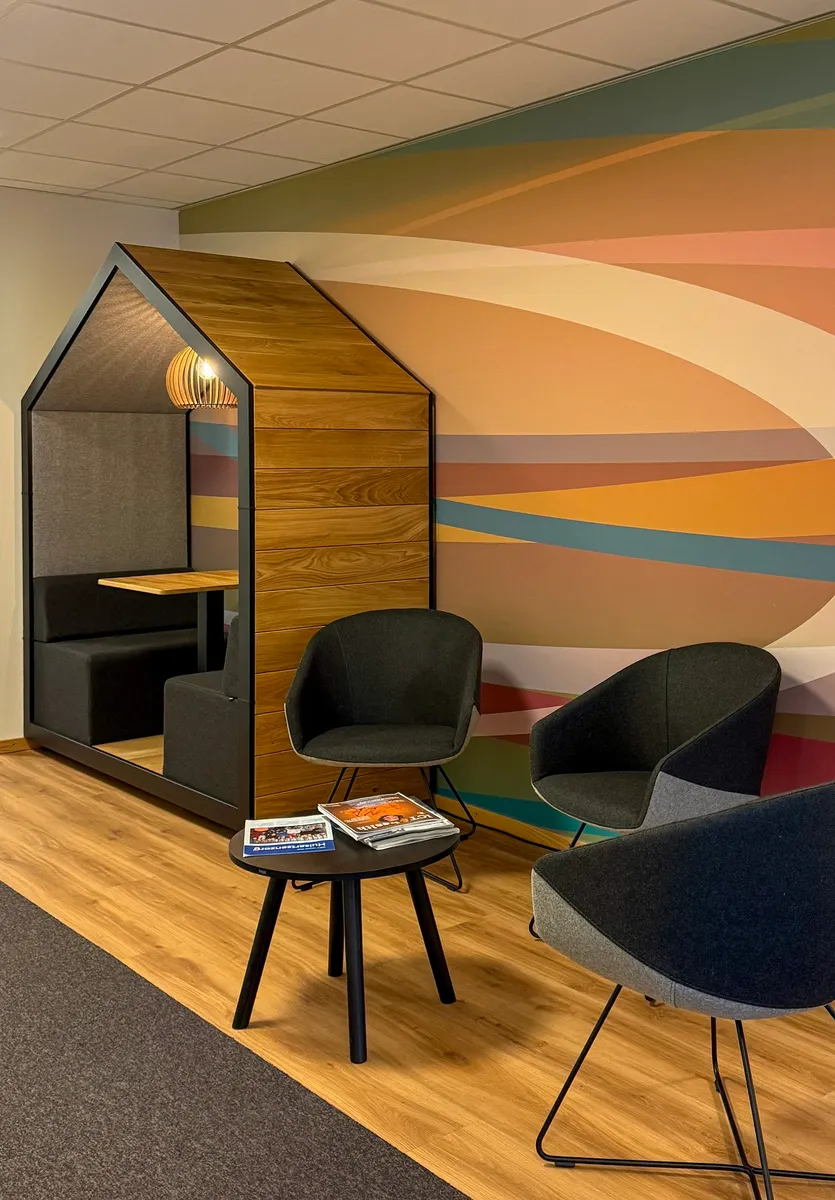
A waiting room asks for refuge: seats with their back to the wall and a view of the door, soft materials, no fluorescent light. A tall plant or a low plant wall between two seating groups gives privacy without building a wall. At Cohesie we placed a Treehouse booth as a sheltered corner in the waiting room.
Hygiene and maintenance
Preserved moss and rented plants with a maintenance contract are the standard in healthcare: nobody on your team has to water anything, and the plants are replaced when they decline. Pots in washable material, no open soil.
Staff
A break room with daylight, plants and a booth to make a call does more for sickness absence than a fruit basket. We draw such places into the fit-out plan.
Frequently asked question
Are plants allowed in a treatment room?
In rooms with strict hygiene requirements we choose preserved moss in a closed frame or a photo print with nature; in waiting and break rooms, real plants.
More knowledge
- What is biophilic design?
- Biophilic design advice and office design
- Biophilic design in North Limburg
- The 14 patterns of biophilic design, translated to your office
- Moss wall or living plant wall?
- Biophilic design in hospitality
- Light, acoustics and green: the interplay
- Office plants: care, rental and which species
Want to see this in your space?
Send a floor plan and photos, or drop by in Venray.