What is biophilic design?
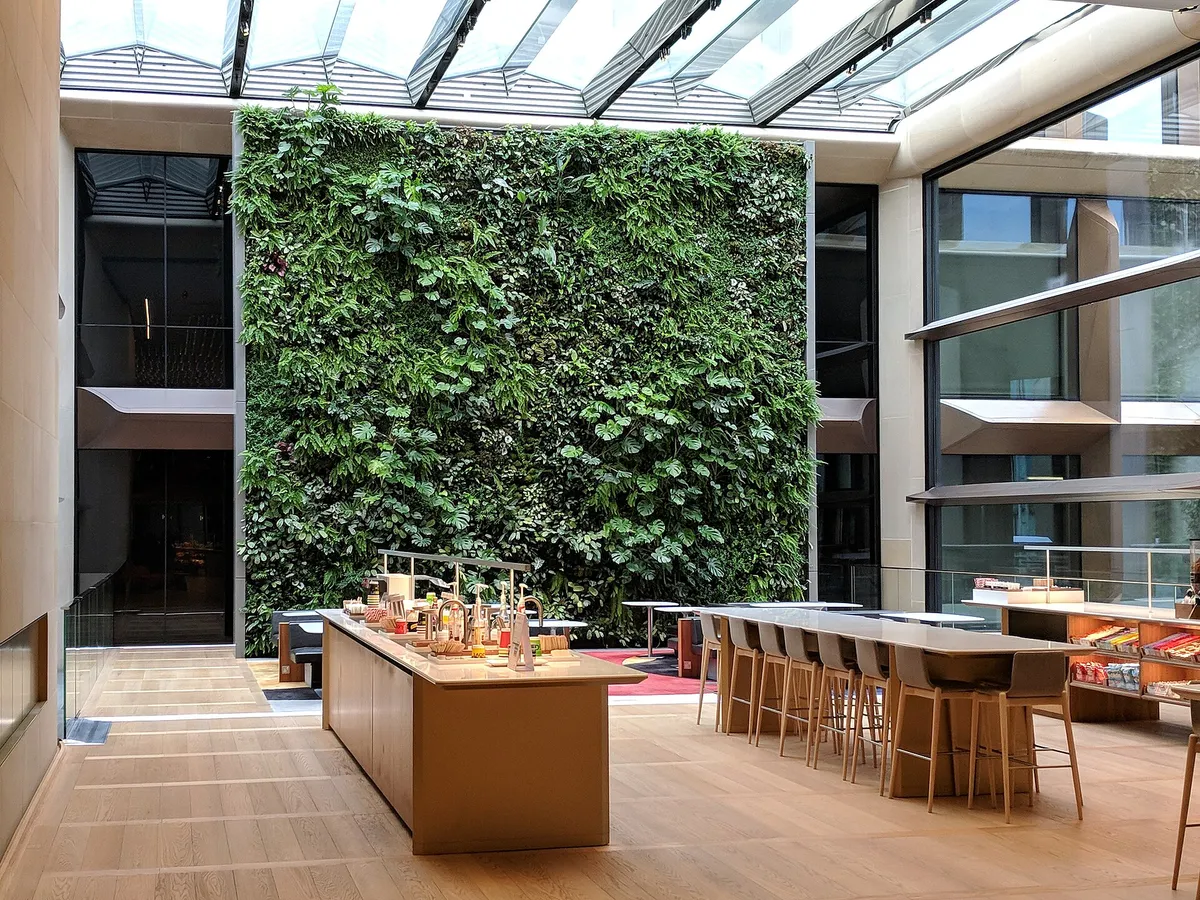
Biophilic design is designing with nature as the starting point: living plants, daylight, natural materials and rooms that feel like a place outside. The word comes from biophilia, the innate preference of people for what is alive. It is not a style but a way of looking, and that is measurably good for concentration, wellbeing and recovery.
Where it comes from
The term biophilia is biologist Edward O. Wilson's (1984): people evolved in nature and still feel best there. Stephen Kellert translated that into architecture, and in 2014 Terrapin Bright Green brought it together in "14 Patterns of Biophilic Design", the checklist designers use today.
The three families
Nature in the space (plants, water, light, air, sound from outside). Nature as reference (wood, stone, natural colours and patterns). Nature as experience (prospect and refuge, surprise, a place to shelter). A good design takes something from each family.
What it delivers
The research is consistent. Human Spaces (2015) measured 15% higher wellbeing and 6% more productivity among 7,600 office workers in places with natural elements. The University of Exeter (2014) saw 15% more productivity after placing plants on a bare floor. And Ulrich showed as early as 1984 that patients with a view of trees recover faster.
How to start
Not with a plant wall two storeys high. Start with light (workstations by the window), then materials (wood and wool instead of plastic), then green where people come together. And combine it with quiet: a booth among plants is the cheapest form of refuge there is.
Frequently asked question
Is biophilic design expensive?
No. A planting plan with rented plants starts at a few tens of euros a month per workstation. A moss wall of three square metres costs about the same as two good office chairs. A living plant wall is an investment, but one that everyone sees.
More knowledge
Want to see this in your space?
Send a floor plan and photos, or drop by in Venray.