The 14 patterns of biophilic design, translated to your office
In 2014 the American firm Terrapin Bright Green brought the research on biophilic design together in 14 patterns. Designers still use them as a checklist. Below, each pattern in brief, with what it means in an office.
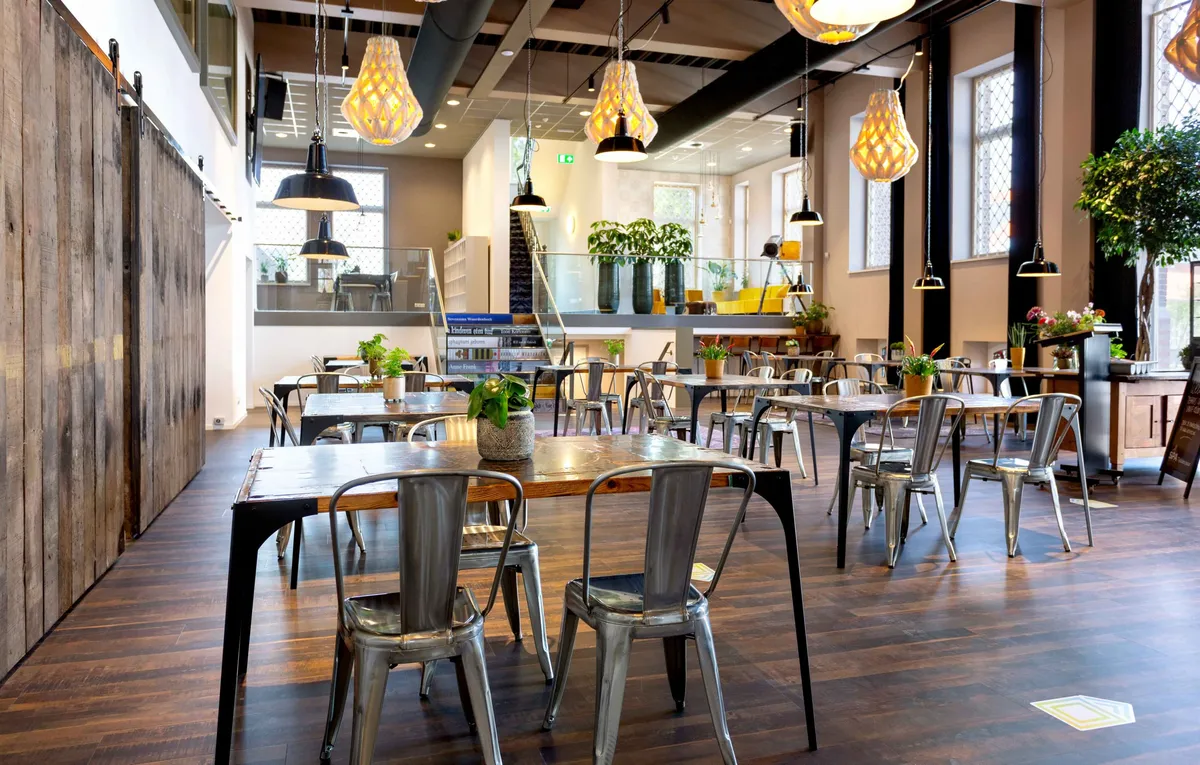
Nature in the space
- Visual connection with nature. Plants, a living wall, a view of trees. In the office: greenery in sight from every workplace.
- Non-visual connection with nature. Sound, scent and texture: running water, the smell of wood. In the office: natural materials you feel, not just see.
- Non-rhythmic sensory stimuli. Small, unpredictable movements, like leaves in the wind or the shadow of a cloud. In the office: living greenery by a window rather than only pictures of greenery.
- Thermal and airflow variability. Air that does not feel the same everywhere. In the office: workplaces by a window that opens, spots that are slightly cooler or warmer.
- Presence of water. Seeing, hearing or touching water. In the office: a small water feature or its sound, where it fits.
- Dynamic and diffuse light. Light that moves with the day. In the office: workplaces by the window and lighting that adjusts colour and intensity.
- Connection with natural systems. Seasons, growth, the weather. In the office: plants that change with the seasons, a view outside.
Natural analogues
- Biomorphic forms and patterns. Shapes that recall nature: curved lines, leaf motifs. In the office: furniture and wall panels without hard corners.
- Material connection with nature. Wood, stone, wool and linen, processed as little as possible. In the office: wooden slats, a wool rug, a stone top. See natural materials.
- Complexity and order. Rich detail with a calm coherence, like a tree crown. In the office: a moss wall with several kinds of moss in a clean frame.
Nature of the space
- Prospect. An unimpeded view across a space. In the office: sight lines across the open floor.
- Refuge. A place to withdraw, with your back covered. In the office: an acoustic booth or a high-backed sofa among the plants.
- Mystery. The sense that there is more to discover: a bend, a glimpse through. In the office: greenery that half screens the view instead of a solid wall.
- Risk. A safe thrill, like a lookout. Rarely needed in an office; a void or a walkway can provide it.
Where to start
Not every space needs all 14 patterns. Three are often a good start: greenery in sight (1), natural materials (9) and a sheltered spot in an open space (12). That is why a booth among the plants works so well. Want to know which patterns suit your space? Read how our advice and office design works.
Source: William Browning, Catherine Ryan and Joseph Clancy, 14 Patterns of Biophilic Design, Terrapin Bright Green, 2014.
Frequently asked question
Is biophilic design the same as plants in the office?
No. Plants are one of the 14 patterns. Daylight, natural materials, refuge and views belong to it just as much. An office full of plants without daylight or a quiet spot is green, but not yet biophilic.
More knowledge
Want to see this in your space?
Send a floor plan and photos, or drop by in Venray.